A Conversation with
Madison Velding-VanDam
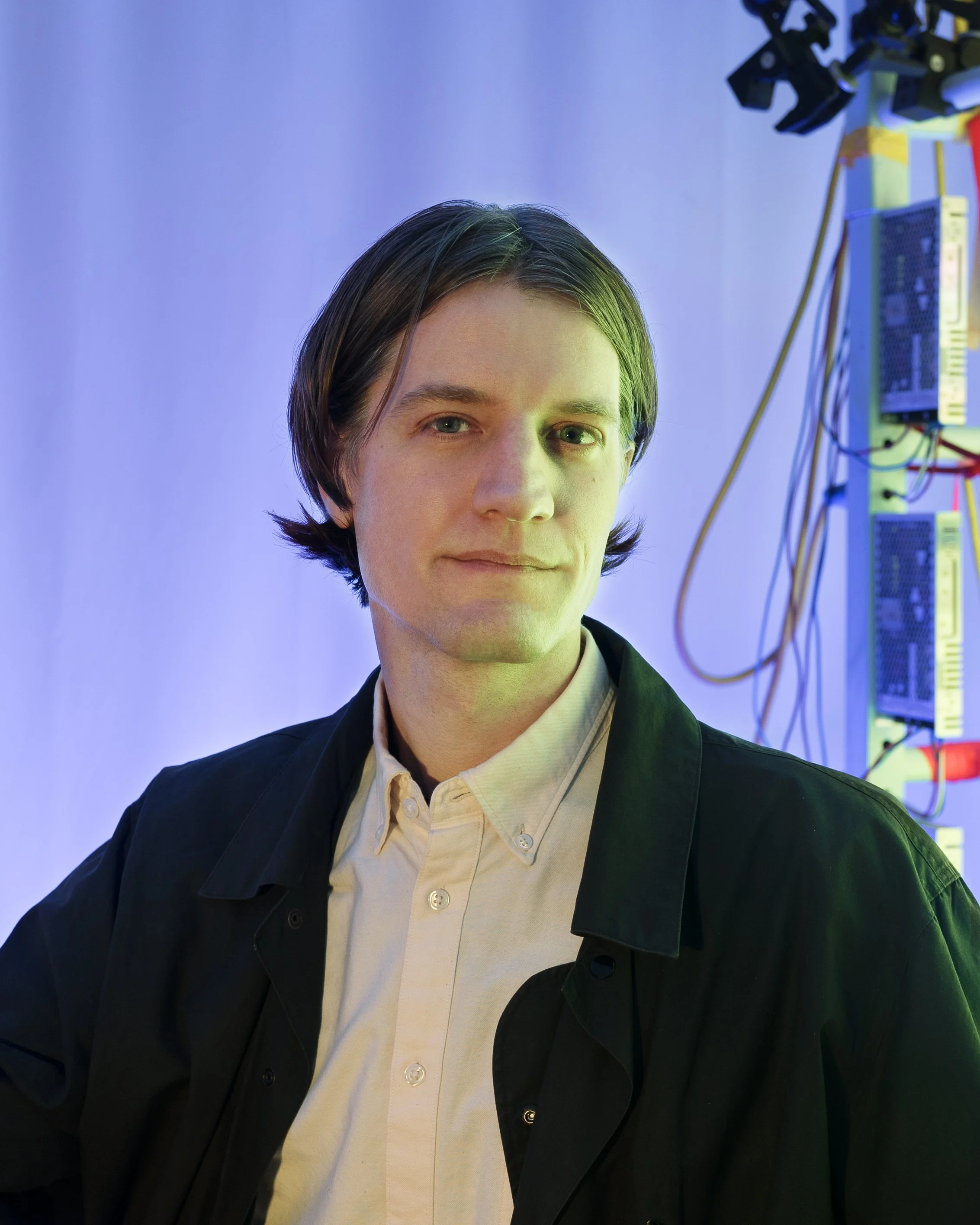
New York–based artist, musician, and producer Madison Velding-VanDam has supported the Bobby Anspach Studios Foundation since its transition to a nonprofit in 2023. As Studio Manager and Digital Archivist, he works closely with the foundation’s leadership to preserve, organize, and activate the studio and archive of Bobby Anspach.
A graduate of the University of Michigan, Madison has toured internationally as a musician and record producer, with work featured on BBC 6 Music, KEXP, CELINE’s Paris runway show, and films screened at MoMA. His projects have also been covered by Pitchfork, Interview Magazine, i-D, and V Magazine.
For this edition of the BASF Conversation Series, we spoke with Velding-VanDam about his multidisciplinary practice, the process of organizing Bobby’s archive, and what it means to steward a studio built around experimentation, collaboration, and transformative experience.
Q: Can you tell us a bit about your background and how your creative practice first developed?
MVV: I grew up in a household where making things was just what we did. My mom is a seamstress, my dad was a chef, my stepdad is a wood sculptor. We lived in a community of working artists, and I spent a lot of time around people who had committed fully to that path. That environment gave me an early, intuitive understanding of what it means to build a practice rather than simply produce objects. I eventually followed music as my primary discipline, but that grounding in a cross-disciplinary creative community is part of who I am.
Q: Your work spans music, production, and visual art. How have those different disciplines influenced one another in your practice?
MVV: Releasing music today requires fluency in visual art and increasingly in software and technology. That's kept me active across mediums in ways a more singular practice might not have. I also collaborate closely with Madison Carroll, my fiancée, on the visual dimension of my work, and that partnership has pushed my thinking. The problems bleed into each other productively: a visual decision will reframe a sonic one, or a production idea will change how I think about a live context. That's ultimately what drew me to Bobby's work: he was operating with relentless curiosity.
Q: How did you first become involved with the Bobby Anspach Studios Foundation?
MVV: I was brought in for my A/V expertise. I'd worked with Frieze and Volta, so I had a practical understanding of the pace and expectations of the New York art world. The foundation was in its earliest formation, emerging as a memorial and preservation of Bobby's work. Even though we'd never met, Bobby and I were part of the same artist community and shared many friends and collaborators. That kind of serendipitous overlap felt meaningful, and it made the commitment feel less like a professional decision than a natural continuation of something.
Q: Do you remember your first encounter with Bobby's work or the Place for Continuous Eye Contact installations?
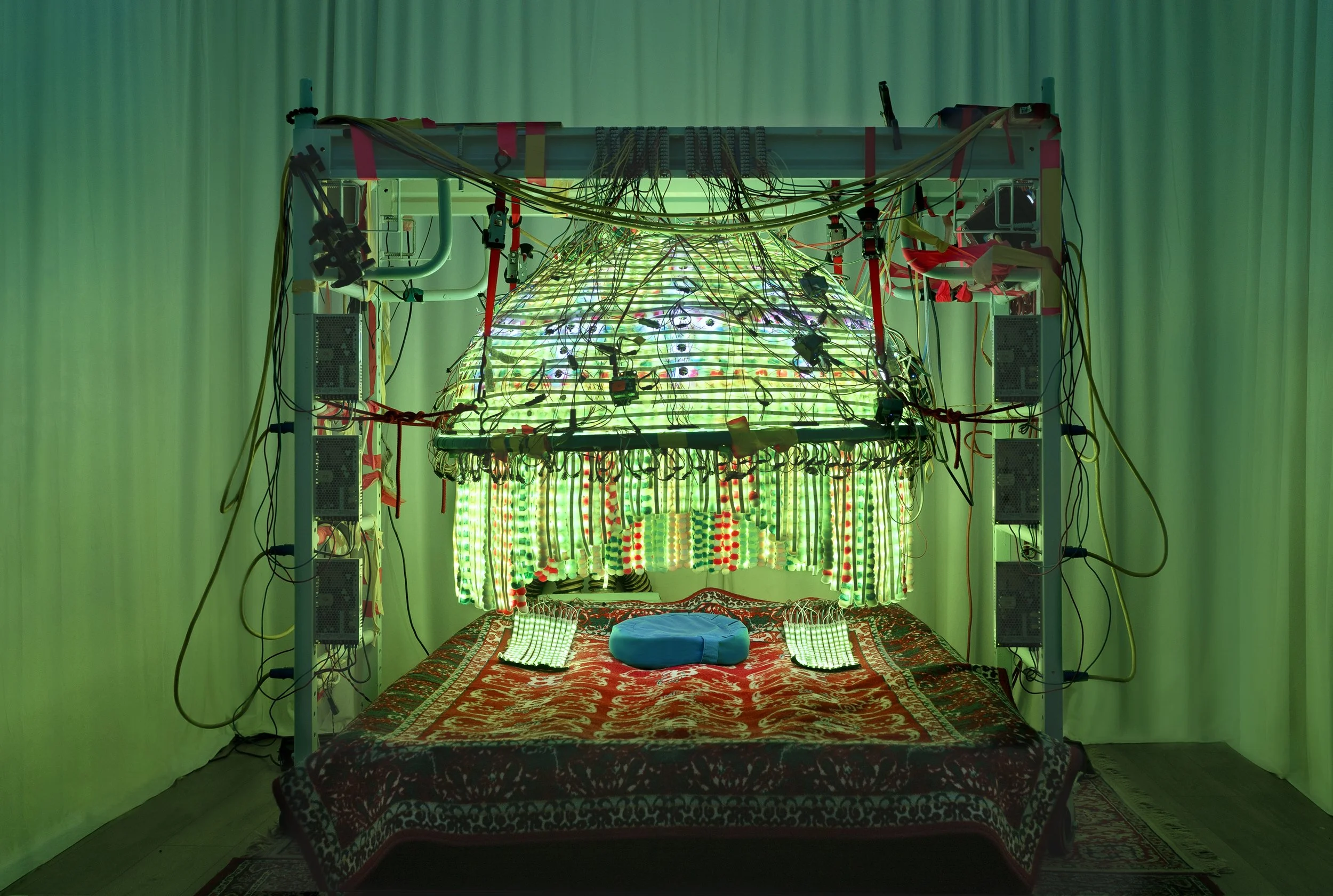
MVV: Ethan Bond-Watts, who had worked closely with Bobby, guided me through the dome, and the experience was genuinely disorienting in the best sense. I had looked at documentation and images, but they gave me no preparation for what the work actually does when you're inside it. That gap between representation and experience is, I think, central to what Bobby understood about his practice: the work resists documentation by design. The use of varied materials, some everyday, some opulent, to produce something so perceptually complete. Eluvium's score integrated seamlessly, and I left knowing immediately that this was work people needed to encounter in person.
Q: You've been involved with the foundation since its transition to a nonprofit. What does your role as Studio Manager and Digital Archivist involve day to day?
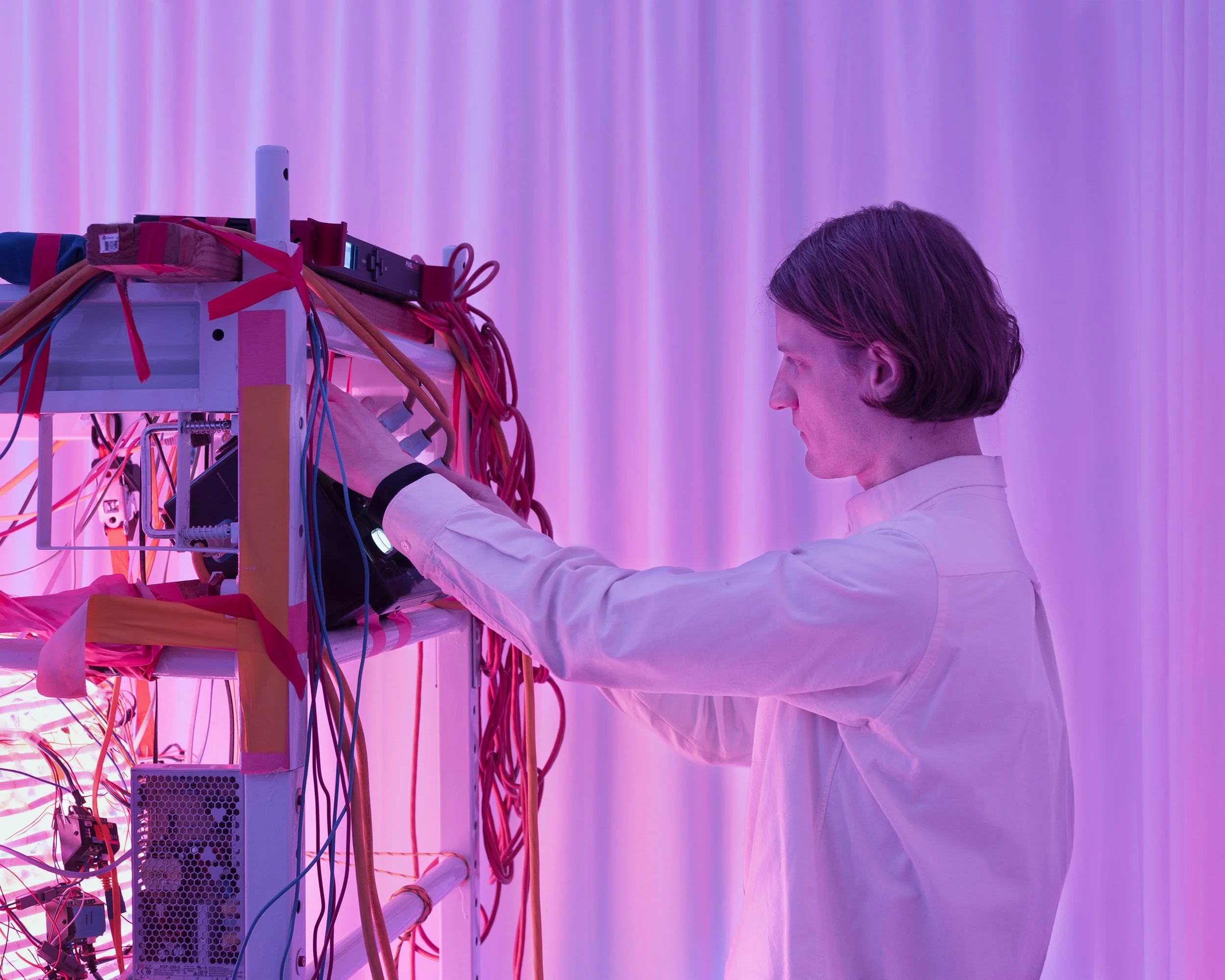
MVV: My immediate priority has been preparing the Manhattan space for public guided experiences of Bobby's Dome. Alongside that, I provide support to grant applicants, oversee the digital archive, and support the director and team across whatever the foundation needs operationally. I've also been developing the training infrastructure for guides who will work with the installations on site, which was a big part of the work Bobby developed. The guiding process is actorly. Guides are trained not simply to explain the work but to hold space for the experience, as Bobby did with everyone who came through the piece, in a way a conventional docent model doesn't account for. We've hired actors for most of our public exhibitions because that skill set is closer to what the work requires. I have to think carefully about how to transmit experiential knowledge and keep it alive as Bobby intended. I think often about the MELA Foundation and Dream House as a model: a destination that functions as a necessary cultural experience for New Yorkers. That's the register I believe Bobby's work belongs in, and working toward that is a real motivation.
Q: Bobby's work often existed as evolving installations rather than static objects. What are some of the challenges of preserving and documenting work that was constantly changing?
MVV: It's one of the most philosophically interesting aspects of the foundation's work. Bobby wasn't invested in preservation in any conventional sense: the work was relational and durational, dependent on being activated in the world, repaired, reinstalled, transformed by each context. The dome is an extreme example of this. Because it has to be disassembled to move through standard doorways and reassembled on site, each installation involves an intense electrical reconstruction. And to Bobby, crucially, however the wiring came back together was the right configuration. So a question like, "do we now freeze the final orientation of these wires in time as the seminal version, or do we consider this process alive in the work?" It ultimately has practical implications: it is much harder to keep the work fixed, and much more true to its nature to let it remain alive and change. The visual result has an organic, almost biological visual logic that a properly rationalized system would never produce. We keep components on hand and remain prepared for ongoing intervention, because maintaining the work means accepting that it will always be slightly different.
Q: You've been organizing Bobby's digital archive as part of this process. What has it been like to work through those materials?
MVV: Working through the images, audio, and video someone generated of their own life and practice puts you in an intimate relationship with a person even if you never met. The Anspach family has been so kind and trusting with this process, with a willingness to allow their son and his fullness to exist and evolve. What's been striking is how intentional Bobby was about documentation. He clearly understood that it carried meaning, that it would one day serve an interpretive and institutional function. The photographs he made inside the sculptures, in particular, demonstrate a real understanding of those interior spaces as sites of significance. Not incidental to the work but essential to it. He did the archival labor himself, and he did it well.
Q: Have there been discoveries in the archive that surprised you or shifted your understanding of the work?
MVV: What's confirmed more than surprised me is the consistency of Bobby's vision. There's a clarity of intent that runs through everything — how he staged and documented exhibitions, how he captured the process in the studio. Nothing feels accidental. That coherence has been enormously useful for the foundation in terms of understanding how Bobby wanted the work to be read, and it gives us a reliable basis for decisions about how to present it going forward. The interior photographs remain the most affecting for me. They reveal that Bobby understood the inside of the work as a primary aesthetic space, not a mechanical substrate.
Q: The installations combine sculpture, sound, lighting systems, and software. What goes into preparing one of the installations to be experienced by the public?
MVV: The maintenance work is ongoing and requires real technical range. The systems were never designed for the longevity they've achieved, which is both a testament to their construction and a constant operational challenge. My background in touring gave me familiarity with the stage lighting infrastructure the installations use, and my A/V work has given me the software fluency to manage the control systems. Preparing for a public opening means cycling through every component: lighting rigs, DMX control chains, structural elements, and building in redundancy wherever possible. The goal is to make the experience feel inevitable and seamless, which requires a great deal of unglamorous technical work in advance and a genuine tolerance for the fact that these installations will always surprise you.
Q: Having spent so much time working with the installations, do you experience them differently now than when you first encountered them?
MVV: The original experience is one of a kind. What I've developed is a deeper understanding of what the work can offer others and myself. I think of it similarly to a meditative practice: if you don't maintain it, you lose access to what it actually offers. There's real craft in guiding someone through an experience like this, and I take seriously the responsibility of transmitting that. The work rewards sustained attention — from the people inside it, and from the people responsible for keeping it alive.
Q: Your own work as a musician and producer also involves immersive sound environments. Do you see connections between your practice and Bobby's approach to creating experiences?
MVV: Deeply, yes. I think Bobby was working in a space that resists easy categorization. His installations occupy a zone between fine art, experiential design, and what we might loosely call entertainment. Music operates similarly, particularly music that prioritizes environment and duration over narrative. Both practices are fundamentally concerned with creating conditions for a particular quality of attention, structuring time and space so that something becomes possible for the person inside it. The specific materials differ, but the underlying logic feels related to me.
Q: What continues to inspire you about Bobby's work as you spend time with it today?
MVV: The response people have coming out of the installations. People so often emerge genuinely moved — crying, laughing, visibly changed. That's special no matter how many times I witness it. The music composed for the piece and the space, Eluvium's score "Shuffle Drones," runs for over thirteen thousand hours, meaning every session carries some element that no one's encountered in precisely that combination before. The work stays alive.