A Conversation with Charlene Carpenzano: Artist, Educator, and Community Outreach Teacher
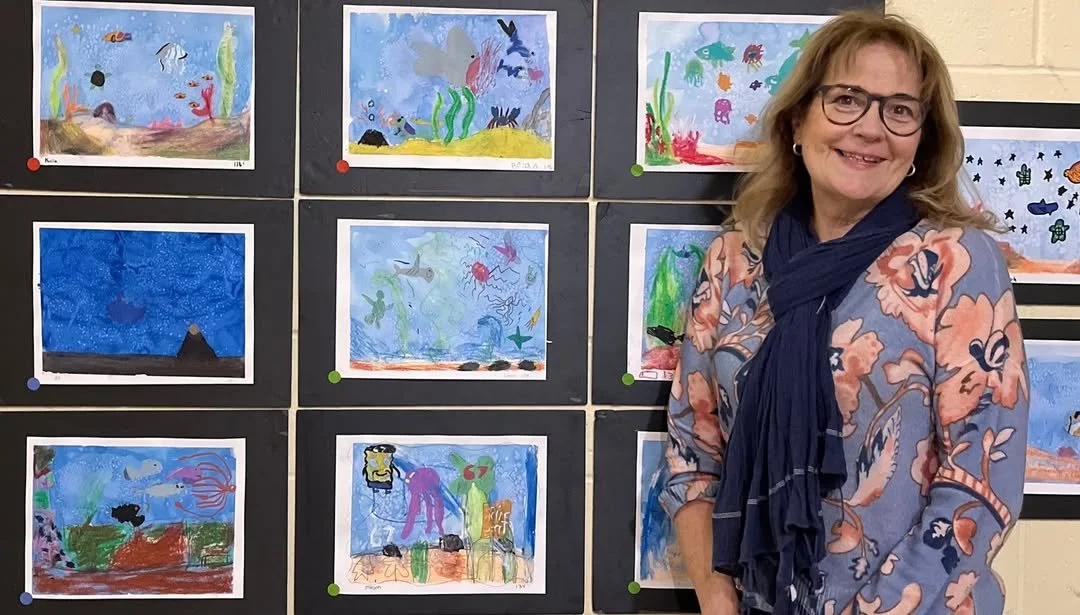
Charlene Carpenzano celebrating Bradley School student artists at South County’s first-ever art show, 2026.
Rhode Island–based artist and educator Charlene Carpenzano has long centered art as a space for reflection, expression, and connection. Since 2003, she has taught at the Newport Art Museum, and for the past 15 years has worked with students at the Bradley Schools, supporting youth with psychiatric and behavioral needs through creative practice.
Carpenzano holds BA and BS degrees in Psychology and Art Education from Rhode Island College and is a founding member of Domus Luti, a pottery co-op in Pawtucket, Rhode Island. Her own studio practice spans sculptural and functional ceramics, with a focus on time, ritual, material, and presence.
For this edition of the BASF Conversation Series, we spoke with Carpenzano about the curriculum she developed in response to Bobby Anspach’s work during the 2025 exhibition Everything is Change. She reflects on her teaching philosophy, her approach to museum-based learning, and the meaningful ways students engaged with Bobby’s work.
Can you tell us a bit about your background and how you came to your work with the Newport Art Museum and the Bradley Schools?
I studied education and psychology in college. At the time, art therapy was just beginning to emerge as a field, so I was interested in how creative practice could intersect with emotional and psychological development. During college I volunteered at Bradley Hospital, and that early experience stayed with me. After graduating, I started a family and eventually became a ceramic artist, opening a cooperative studio in Pawtucket. Working with clay helped me reconnect with my own artistic practice.
In 2003, I began teaching ceramics at the Newport Art Museum. I started by teaching adults and later began working with children. The museum partnered with the Bradley Schools through an outreach program, and I began teaching there as well. Today I teach at four of the five Bradley Schools across Rhode Island. I’m also the Clay Studio Manager and Lead Teaching Artist at the Newport Art Museum. Every day I wake up excited to go to work!
For readers unfamiliar with the Bradley Schools, can you describe the students you work with?
The Bradley Schools serve children and young adults who have emotional, behavioral, or developmental challenges. Some students are neurodivergent, and others are navigating complex life circumstances. Art can be incredibly meaningful in that context. It offers a way for students to express themselves and explore ideas that may be difficult to articulate with words. Classes are small – usually around ten students – which allows for meaningful interaction and conversation.
How do museum exhibitions influence the lessons you develop for your students?
A large portion of what I teach is inspired by exhibitions or works from the museum’s permanent collection. I try to build connections between the artwork and other areas of learning including history, poetry, social studies, even math. For example, if we’re discussing patterns in artwork, we might explore how patterns appear in mathematics or nature. I’m always looking for ways to create a broader conversation. The goal is to help students see that art is connected to everything.
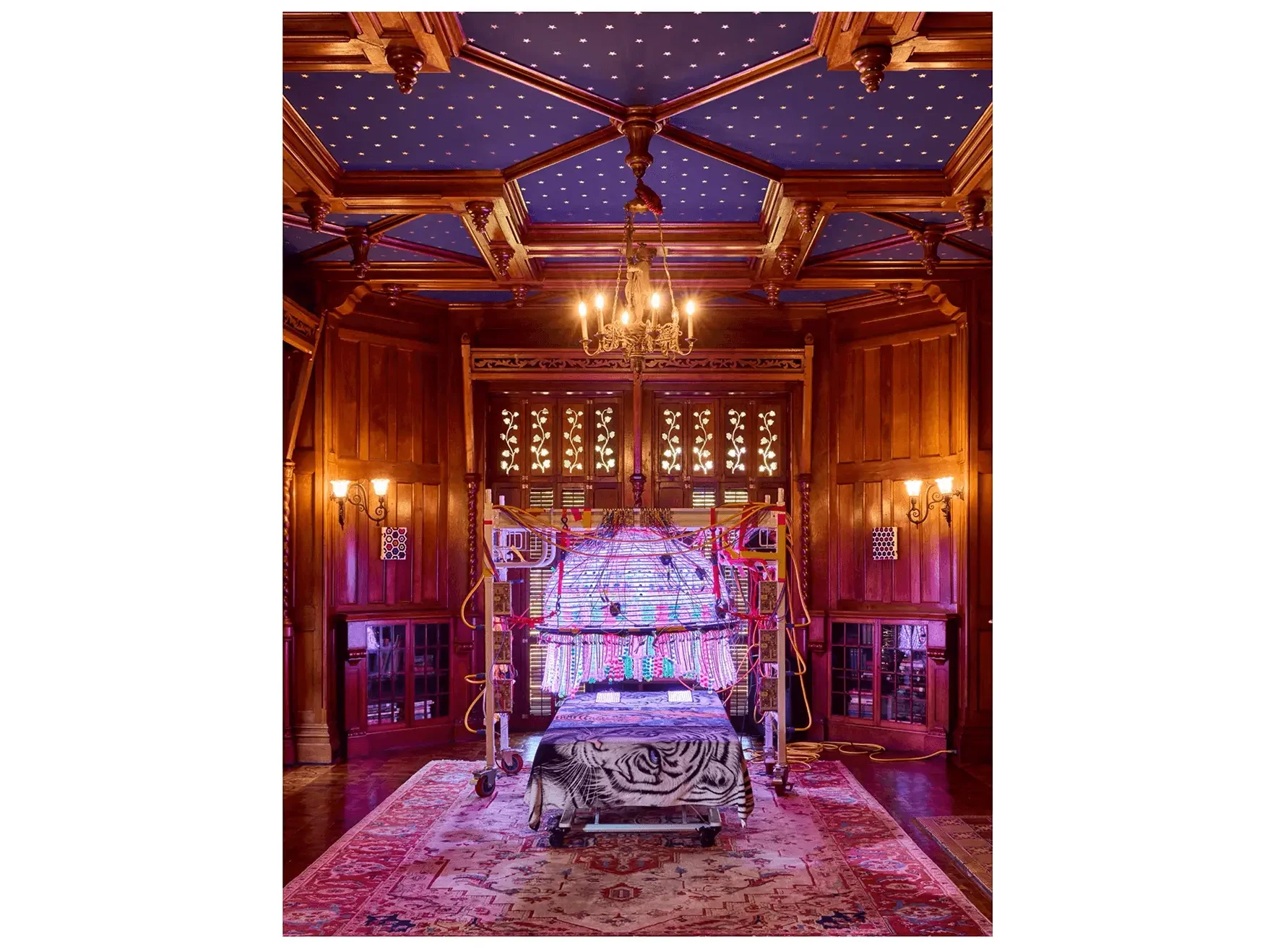
Bobby Anspach, Place for Continuous Eye Contact (Dome), 2025. Installation view, “Bobby Anspach: Everything is Change,” the Newport Art Museum, 2025.
What first drew you to Bobby Anspach’s work during the exhibition Everything is Change?
When I encounter an artwork that speaks to me, I like to sit with it first before researching anything about it. I experienced Bobby’s Place for Continuous Eye Contact installation and it became a very moving moment for me. I had recently been seriously ill, and the experience of the work made me feel deeply aware of being alive, and of simply being here. After that experience, I began researching Bobby’s work and watching the videos he created while he was a student at RISD. But most importantly, I spent time thinking about how the work made me feel. That emotional response became the starting point for the curriculum.
You also brought students to see the exhibition. What surprised you most about their reactions?
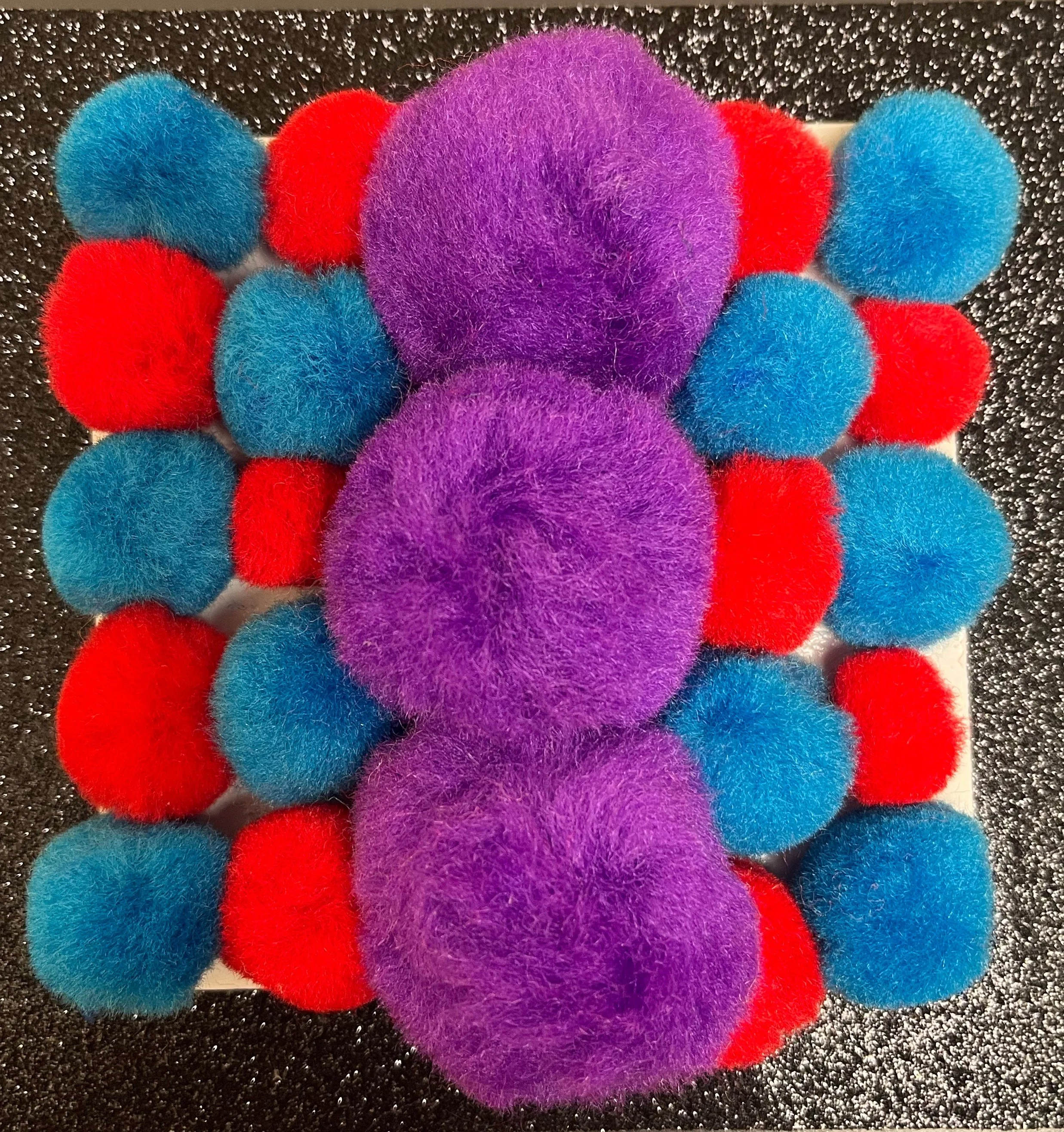
Students often see things adults miss. One sculpture featured colorful pom-poms arranged in a globe-like structure. The upper portion appeared chaotic, while the lower portion had a more structured pattern. Several students immediately said it looked like a virus – specifically the coronavirus. I had never interpreted it that way before. Other students described the top as something cosmic, like outer space, while the bottom felt grounded and stable. What fascinated me was that every student saw something different. Their perspectives expanded the conversation.
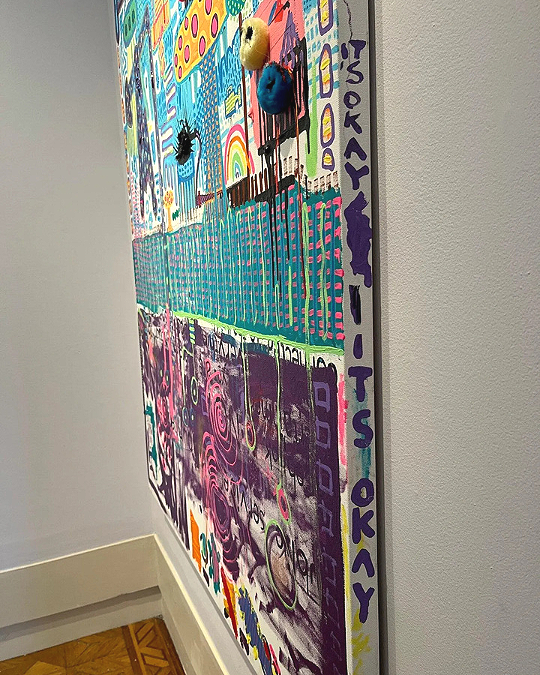
Side of Bobby Anspach painting on view at Newport Art Museum reading, "It's Okay. It's Okay."
Were there particular moments from the exhibition that stayed with you?
One group of older students spent time with a painting that included the phrase “It’s okay.” They talked about how the painting appeared joyful at first, but when they looked more closely, they noticed tension and emotional depth in the imagery. That conversation became central to our discussions.
Sometimes life feels chaotic or difficult – but it’s still okay, those feelings are okay. That phrase became something of a guiding idea for our lessons. I even wrote “It’s okay” on a small card and kept it on my desk while I was teaching the curriculum.
How did you translate Bobby’s work into classroom projects?
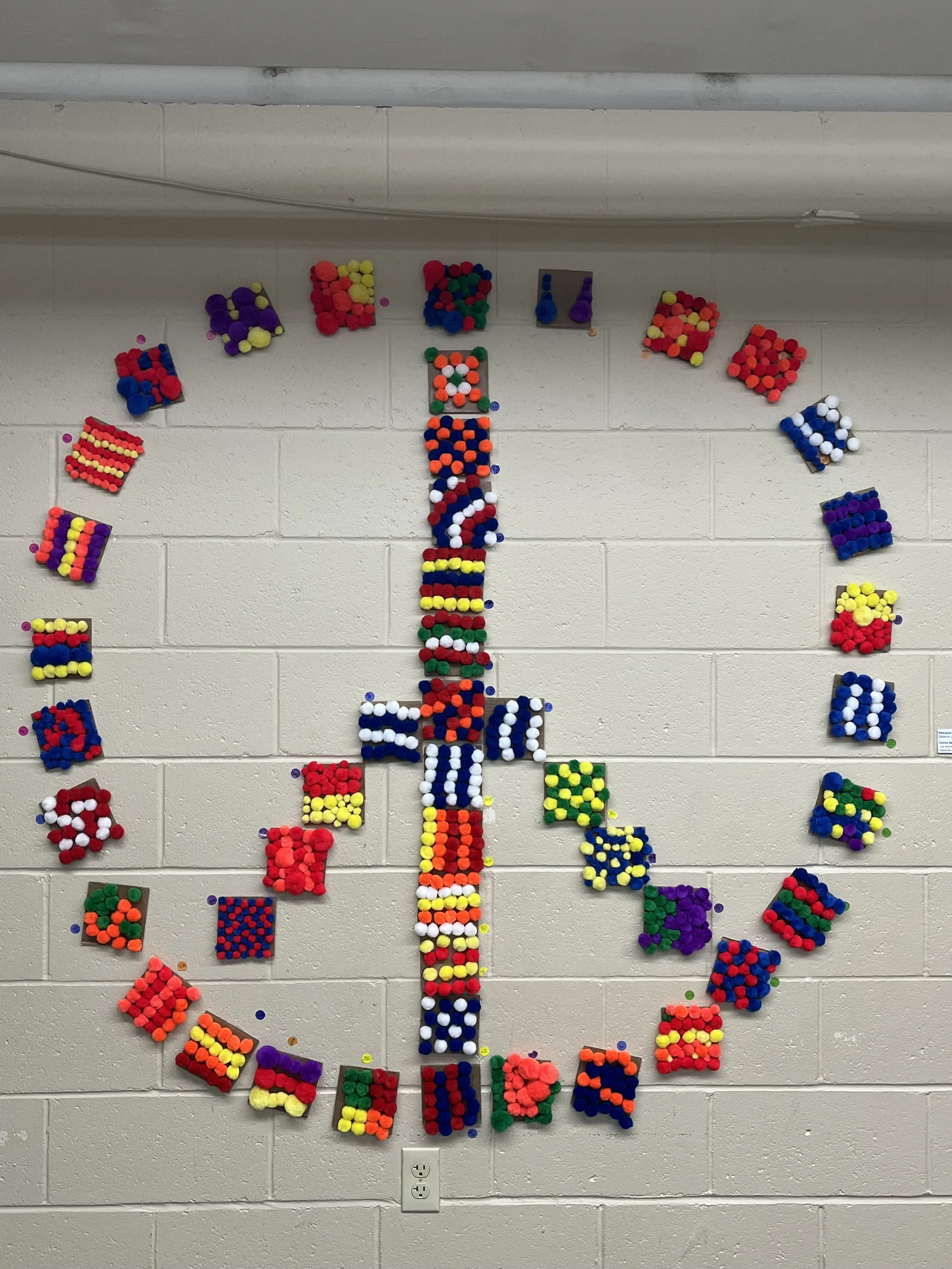
The curriculum unfolded over several weeks and included a series of connected projects. We began with pom-poms, inspired by Bobby’s sculptures. Students explored color, texture, and pattern. We discussed how artists sometimes make mistakes, and how those mistakes can become part of the work. This led into conversations about life as well. Not everything is perfect, and that’s okay. Students created their own pom-pom squares, which we later assembled into a larger piece for World Peace Day. Together the students formed a peace symbol using their work.
What came next in the program?
The next phase focused on eye contact and observation. Students practiced looking at one another directly. At first it felt very awkward – many of them giggled or looked away. But after a moment, they settled into the experience. That exercise opened up discussions about vulnerability, connection, and presence.
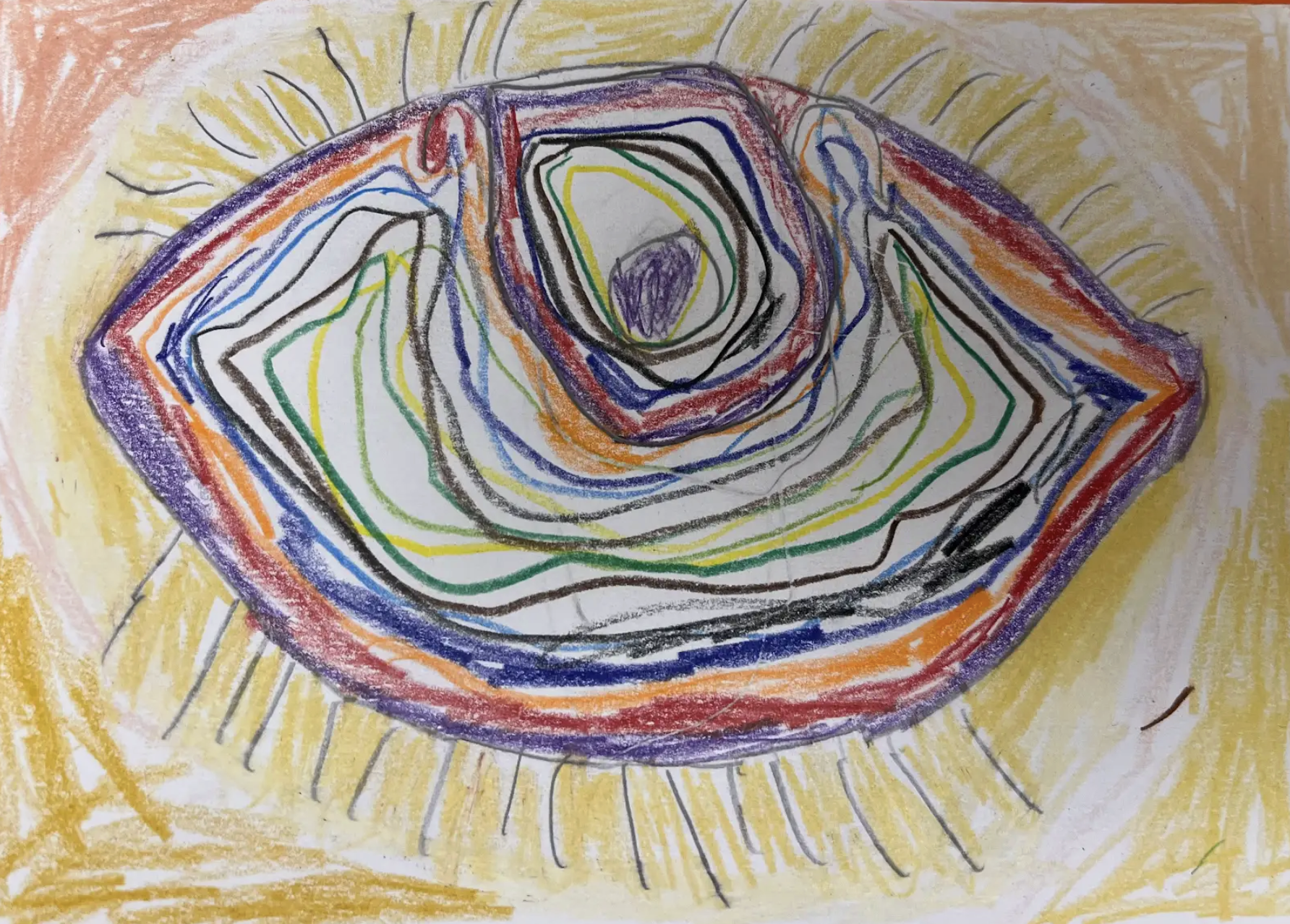
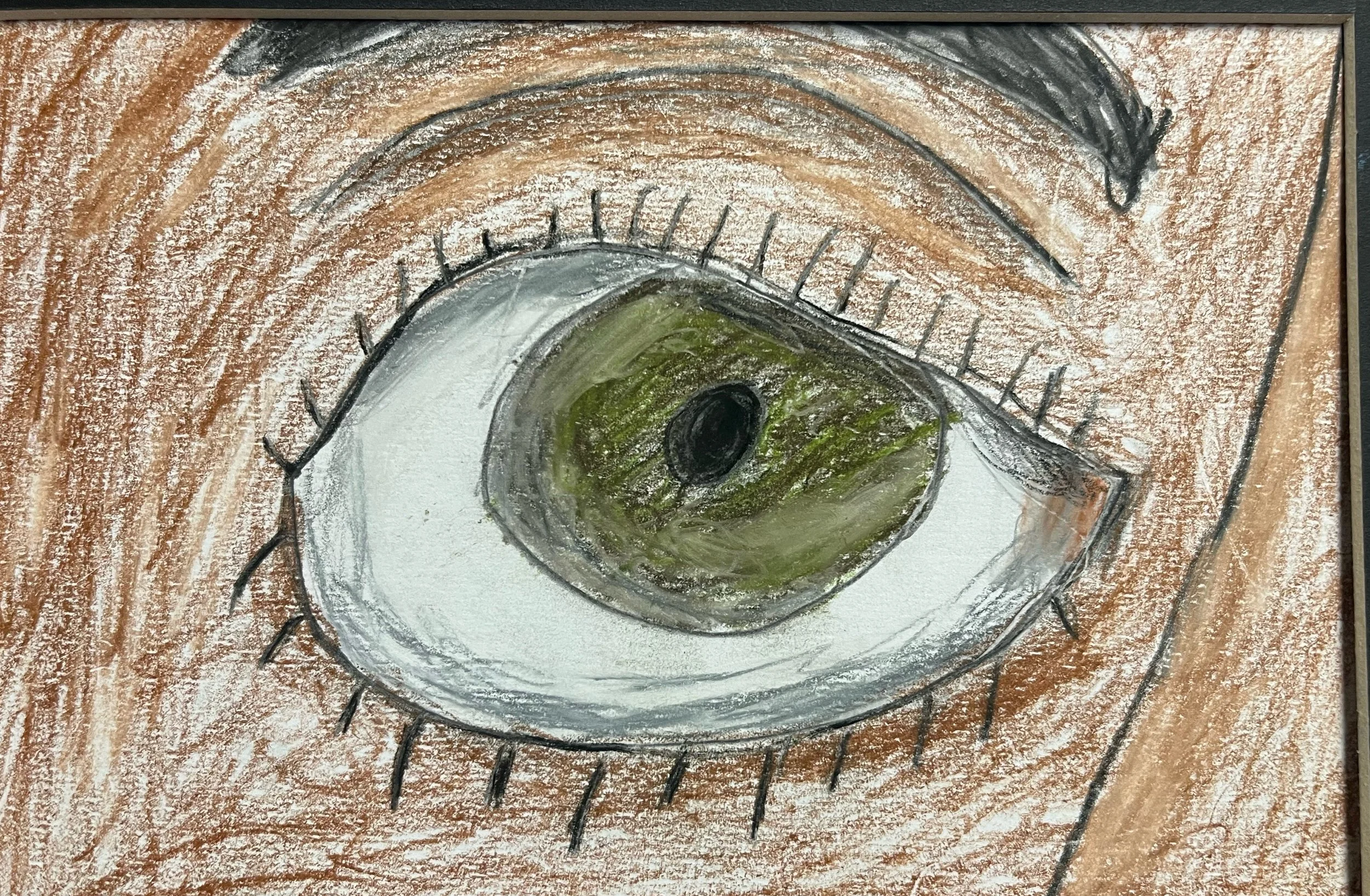
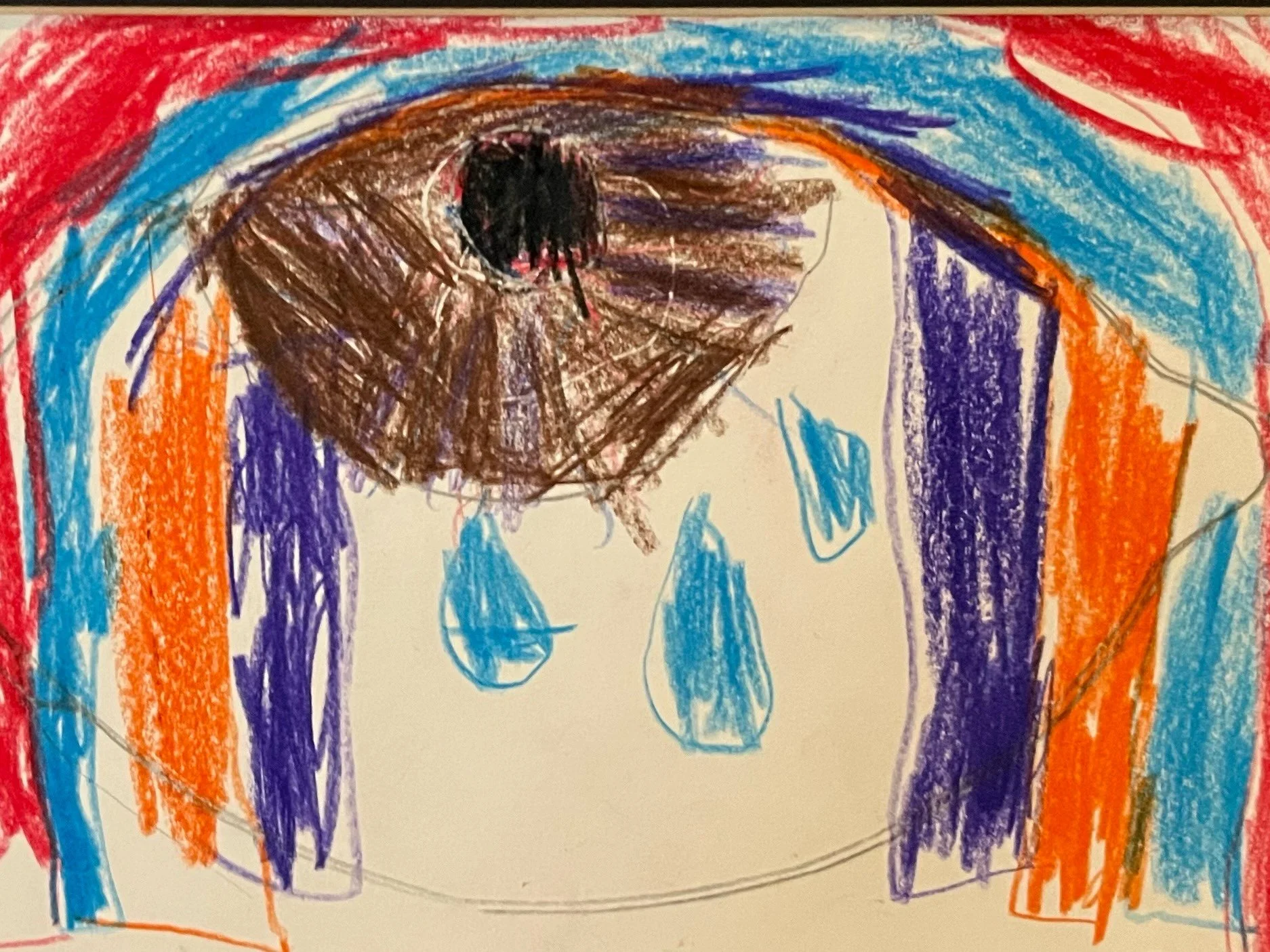
From there we moved into self-portraits of the eye. Students photographed their own eyes and then created drawings expressing an emotion, without using words. Some drawings were abstract, some were very detailed. One student drew an eye filled with tears, which was incredibly expressive.
You also incorporated sculpture into the curriculum.
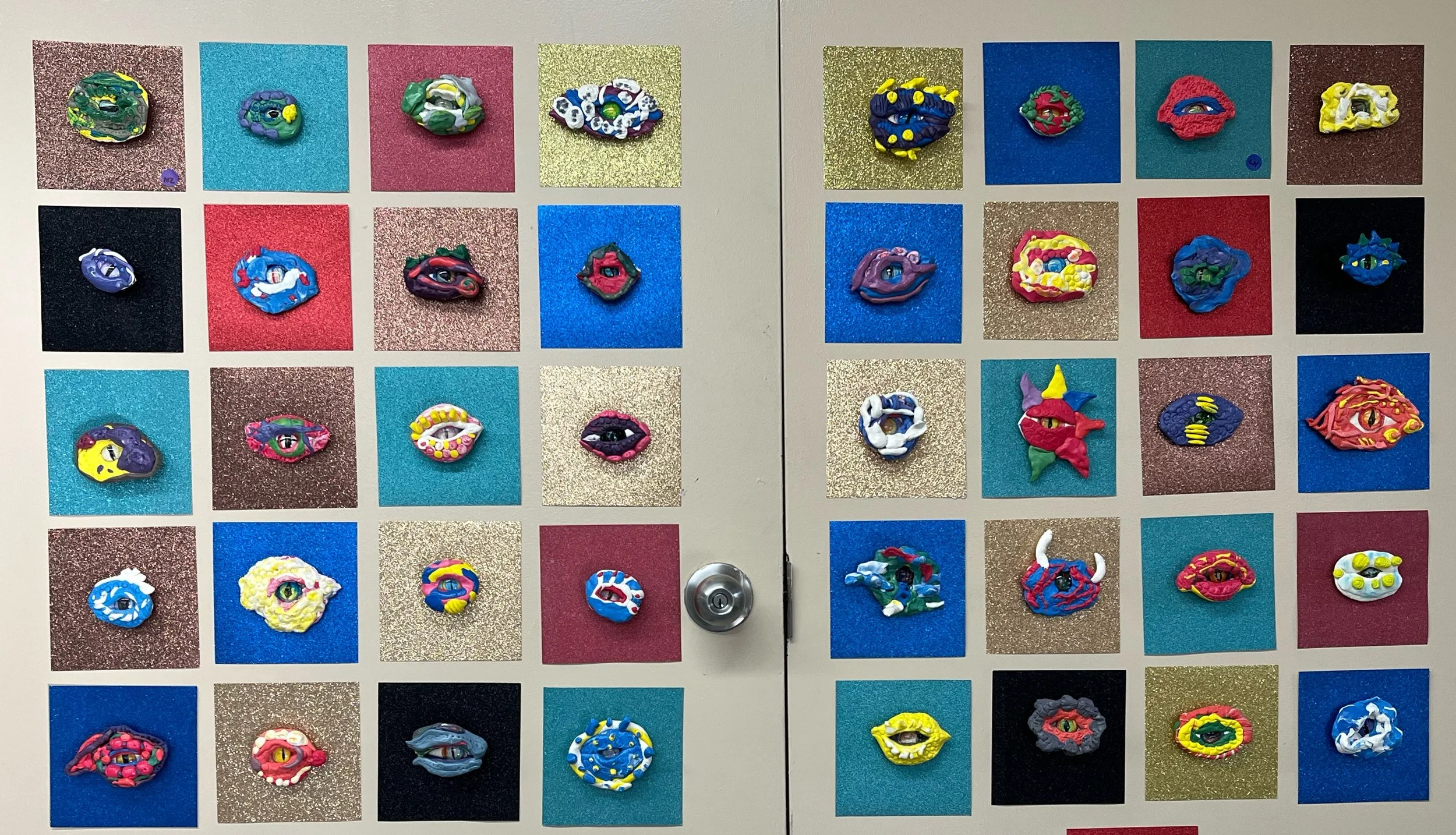
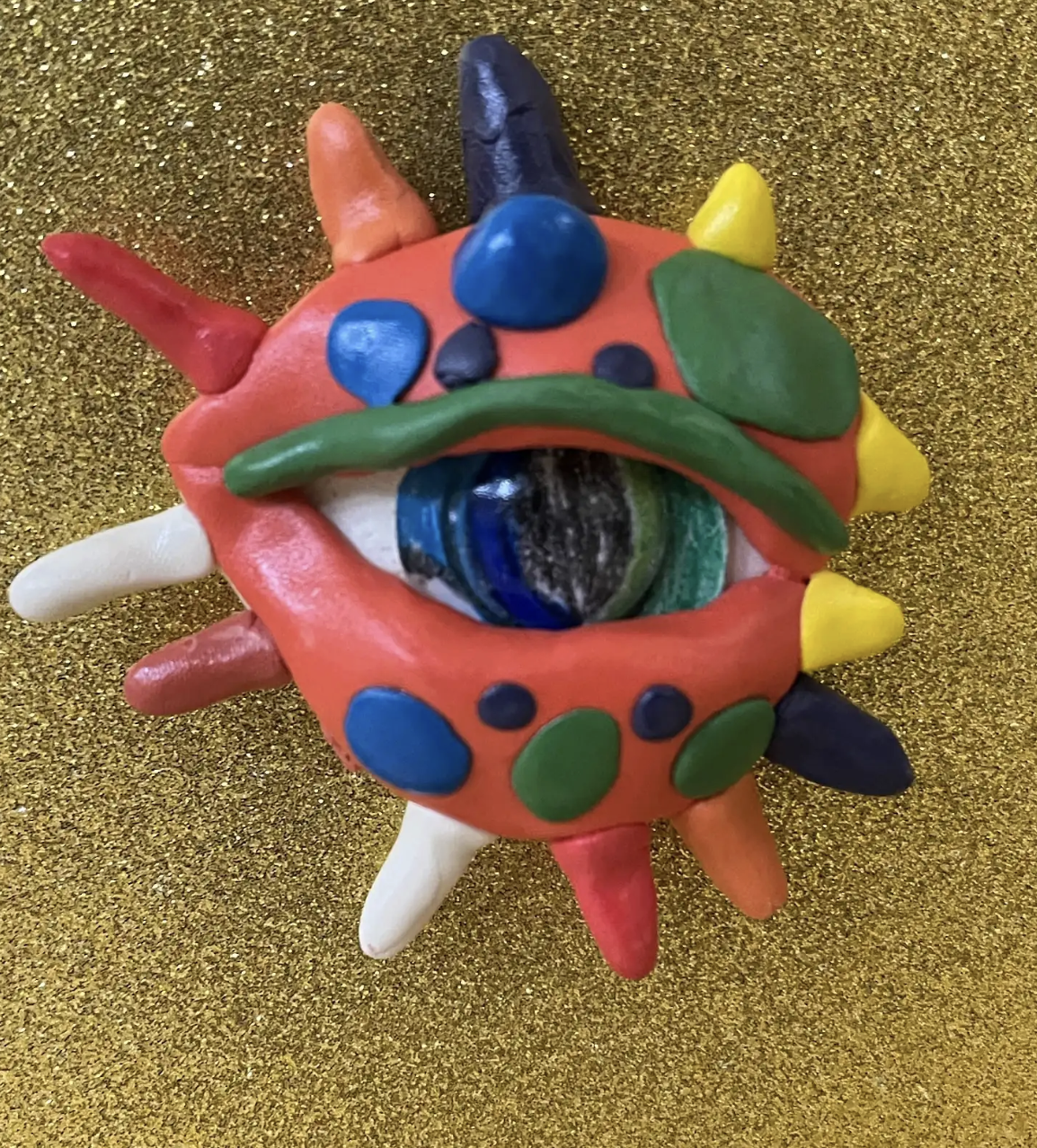
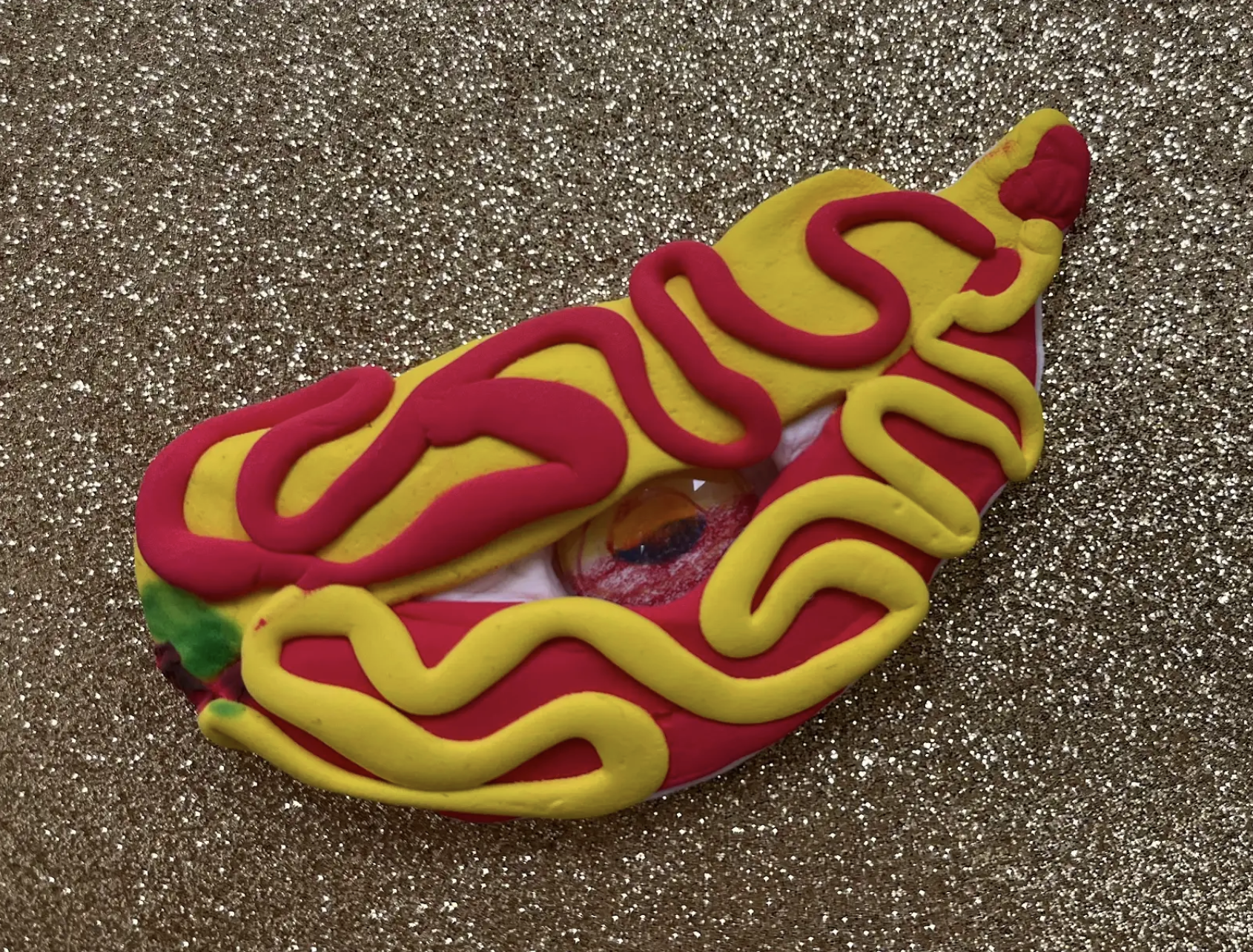
Yes. Since I work primarily as a sculptor, I wanted to bring the work into three dimensions. Students created sculptural eyes with “superpowers.” They imagined what their eye could protect or see. Some students said their eye could help them fly or become invisible. Others said it could protect their families. One student created an eye whose power was “perfect seasoning” – the sculpture was decorated with ketchup and mustard. The project became playful and imaginative, but it also revealed deeper emotions and personal stories.
How were the works ultimately presented
We created an exhibition within the schools. Each student’s sculptural eye was mounted on shimmering paper inspired by the sparkle of Bobby’s paintings. Together they formed a large patchwork installation. Seeing their work displayed publicly was incredibly meaningful for the students. Presentation and connection are very important parts of my teaching philosophy. Art shouldn’t just disappear into a drawer.
Do you find that students remember experiences like this long-term?
I believe they do. There are certain projects you remember from childhood. I think this will be one of those for many of them. It wasn’t just about making something – it was about conversation, emotion, and connection.
Have you experienced similar responses with other art-based programs?
Yes. Poetry projects often create that same level of emotional connection. Students write poems and create artwork inspired by them, then share their work with classmates or staff members. By that point in the school year they trust the classroom environment enough to open up. But Bobby’s work created a very special dynamic.
Is there anything you’d like Bobby’s family to know about the impact of this project?
I would want them to know how much his work affected the students. The students were genuinely excited to participate. They wanted to talk about the work, ask questions, and explore the ideas behind it. It made every class feel meaningful. His work stayed with them, and I believe it will stay with them for a long time.